
On-Grid Solar
Cut your electric bill by using the grid like a seasonal battery.
With grid-tied solar, summer overproduction becomes utility bill credits, and those credits can offset higher winter usage when days are shorter.
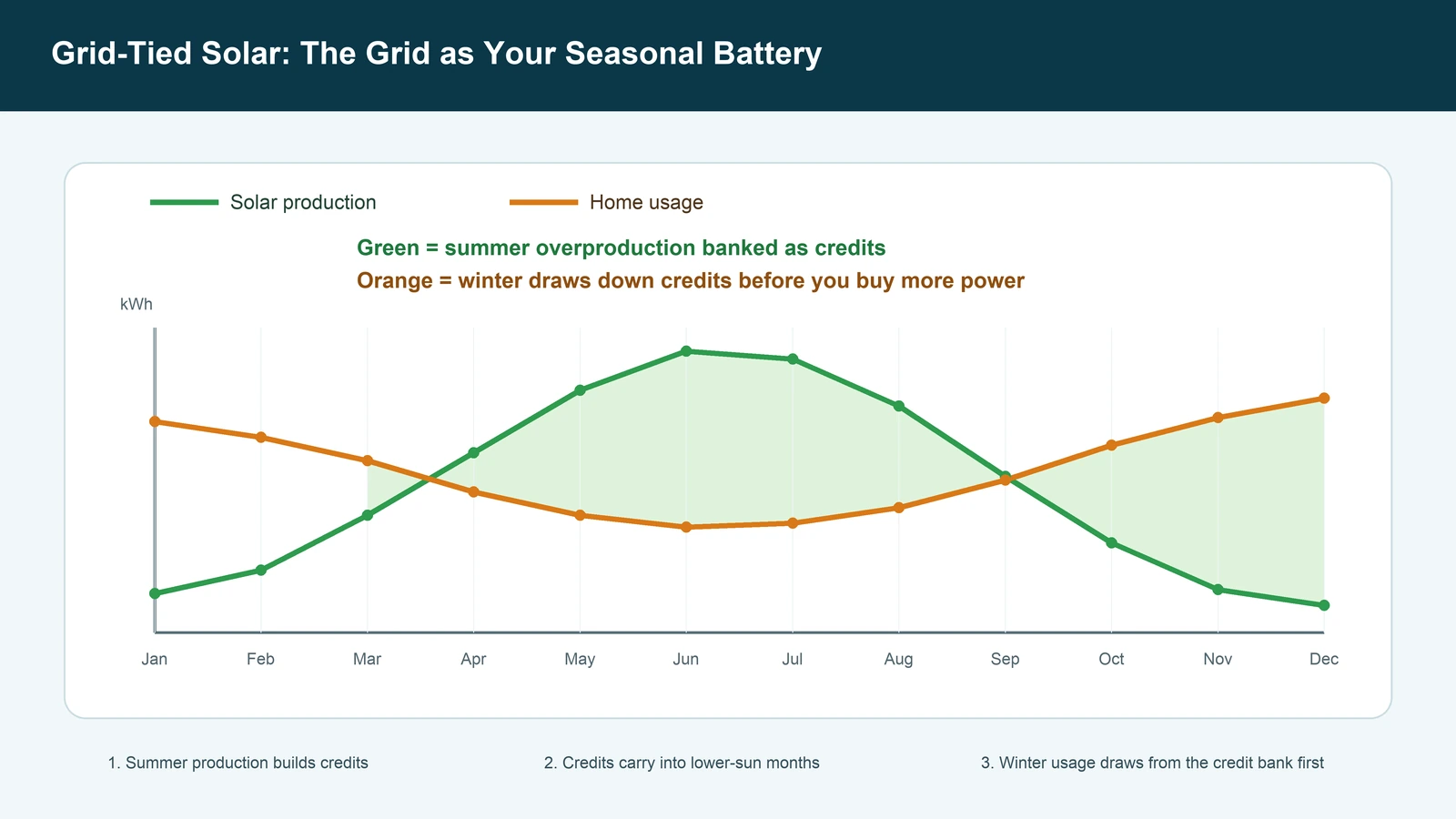
How the “seasonal battery” strategy works
Unlike an off-grid system that stores all energy on-site, a grid-tied system lets your meter run both ways. In summer, strong production can exceed daytime usage. Those excess kilowatt-hours become bill credits. In winter, when your home uses more than the array produces, those credits get applied first.
Summer
- Long daylight window drives production up.
- Usage is often lower than shoulder/winter months.
- Excess generation builds a credit bank.
Winter
- Production drops as days shorten.
- Heating and lighting loads can increase.
- Summer credits reduce what you buy from the utility.
Design target
We size on-grid systems against your annual usage profile so your credits are used strategically instead of being stranded.
North Idaho utility net-metering differences
Use this as a design map, not a static tariff promise. Policies and rates update over time, so we verify the active utility rules before final system sizing.
Avista (Idaho)
- Credit window: Excess kWh rolls month-to-month, then unused annual credits are removed on March 31.
- Design focus: Size annual production so summer credits offset winter use without leaving avoidable credit behind at reset.
- Posted reference: Schedule 63 covers systems up to 100 kW. Avista’s Jan. 1, 2026 Idaho summary lists 9.641¢/kWh for the first 600 kWh and 10.863¢/kWh above 600 kWh, plus fixed charges and riders.
Kootenai Electric Cooperative (KEC)
- Credit window: Excess monthly generation becomes banked kWh credits; posted schedules state credits remain available until consumed, with adjustments for energy-cost changes.
- Design focus: Net metering can reduce energy charges, but demand charges may still drive the bill. Pair solar sizing with battery controls when peak fees matter.
- Posted reference: KEC’s posted residential R119 schedule lists a $32.50 service availability charge and 6.808¢/kWh energy charge. See KEC Peak Shaving for demand-charge strategy.
Inland Power
- Credit window: Overproduction carries to an energy bank monthly and resets to zero on March 31 each year.
- Design focus: Match production to real annual use and plan around the March reset so the system does not overbuild stranded credits.
- Posted reference: Inland states members still pay monthly service-availability charges, and site or metering setup fees may apply.
Ready to see your own summer-to-winter credit profile?
We’ll map your 12-month usage against your utility’s current net-metering rules, then show a right-sized on-grid design and expected bill impact.
Utility rules evolve. Final proposals are always based on the active tariff sheets in your service territory at the time of design.